From Minho crab to Algarve clams and limpets in the Atlantic islands, Portugal’s seafood rewards a little local knowledge. Here is where to sit down, what to order and how to leave enough time for lunch.
First, ask what came in
A good seafood lunch in Portugal often begins before you sit down. Someone is tending charcoal outside; someone else is inspecting a fish as seriously as a piece of jewellery. Follow that attention, rather than the biggest sea view. Along this coast, the most useful question is simple: “What do you recommend today?” Then ask where it was caught. A short, changing selection can tell you more than a handsome menu.
Fish and shellfish are often priced by weight. Confirm the weight and likely total before agreeing to a whole fish or crab, and ask how many people it will feed. Bread, olives and other small dishes brought without ordering are generally charged if eaten; you can decline them. Reserve weekend lunches, especially in summer, and resist filling every afternoon with appointments. The best part may be the last spoonful of broth.
The north: crab in Minho, charcoal near Porto
Start in Viana do Castelo, where the Lima meets the Atlantic and the maritime past still shapes the town. Look for sapateira recheada, brown crab served with a rich mixture in its shell, followed by simply grilled fish. Farther south, Esposende makes an appealing lunch stop between the river Cávado and the dunes. These are places to ask about the catch, not insist on a particular species.
For a seafood outing from Porto, head to Matosinhos, usually 20 to 35 minutes by car from the centre, depending on traffic. Around Rua Heróis de França, grills perfume the pavement. Order sardines when locally caught fish is in season, commonly in the warmer months, or share a grilled robalo, sea bass, with boiled potatoes and greens. Viana is roughly an hour north of Porto by road, so give it a full day rather than squeezing it between city sights.
The central coast: eels, fish stews and working harbours
Around the Ria de Aveiro, seafood follows lagoon traditions as well as the open ocean. In Murtosa and Torreira, look for caldeirada de enguias, an eel stew with potatoes whose seasoning varies by kitchen. Eels have become a conservation concern, so ask about sourcing and do not assume every traditional dish is an everyday recommendation. Grilled coastal fish offers another satisfying route into the region.
Continue to Nazaré or Peniche for caldeirada de peixe: mixed fish cooked with potatoes, onion, tomato and peppers. It is often prepared for two or more, so check before ordering starters. Nazaré’s fish-drying tradition survives beside the beach, a reminder that preservation once mattered as much as freshness. Allow about an hour between Nazaré and Peniche by road. Choose one for lunch and enjoy the other as a harbour walk, rather than attempting two substantial meals.
Browse our travel inspiration for ideas, or tell us what kind of day you have in mind.
Around Lisbon: choose your shore
West of Lisbon, Ericeira’s fishing identity sits comfortably beside its surf culture. Ask about grilled besugo, blackspot seabream, or linguado, sole, and consider percebes if available. These goose barnacles taste intensely of the sea; twist the leathery casing away carefully, since they have a habit of splashing your neighbour. Allow roughly 45 to 60 minutes from Lisbon, longer at busy times.
South of the capital, Setúbal has a different signature: choco frito, strips of fried cuttlefish, usually served with chips and lemon. Sesimbra is a strong choice for grilled fish, with restaurants clustered near its fishing harbour and beachfront. Either town generally takes around 45 to 60 minutes from Lisbon outside heavy traffic.
For an unhurried coastal day, Portugal Magik is a trusted private tour partner in Portugal, travelling in Mercedes-Benz vehicles. A local driver/guide can shape the day around the guests, combining a harbour stroll, lunch and an Arrábida viewpoint without treating the meal as a timed stop.
The Alentejo coast: leave room for the rice
Between Sines, Porto Covo and Vila Nova de Milfontes, the coast becomes rougher and the lunch rhythm slower. Seek arroz de marisco, seafood rice served brothy rather than dry, or arroz de tamboril, monkfish rice. Ask what shellfish goes into the pot: recipes and availability differ, and the dish may carry a minimum order for two.
Around Zambujeira do Mar and nearby Azenha do Mar, percebes and grilled fish suit the dramatic shoreline. This is not a sensible quick lunch excursion from Lisbon: Vila Nova de Milfontes is about two and a half hours away by road. Stay overnight, or make lunch part of a southbound journey. Even short-looking coastal distances deserve time for winding roads and the irresistible pull of a cliff path.
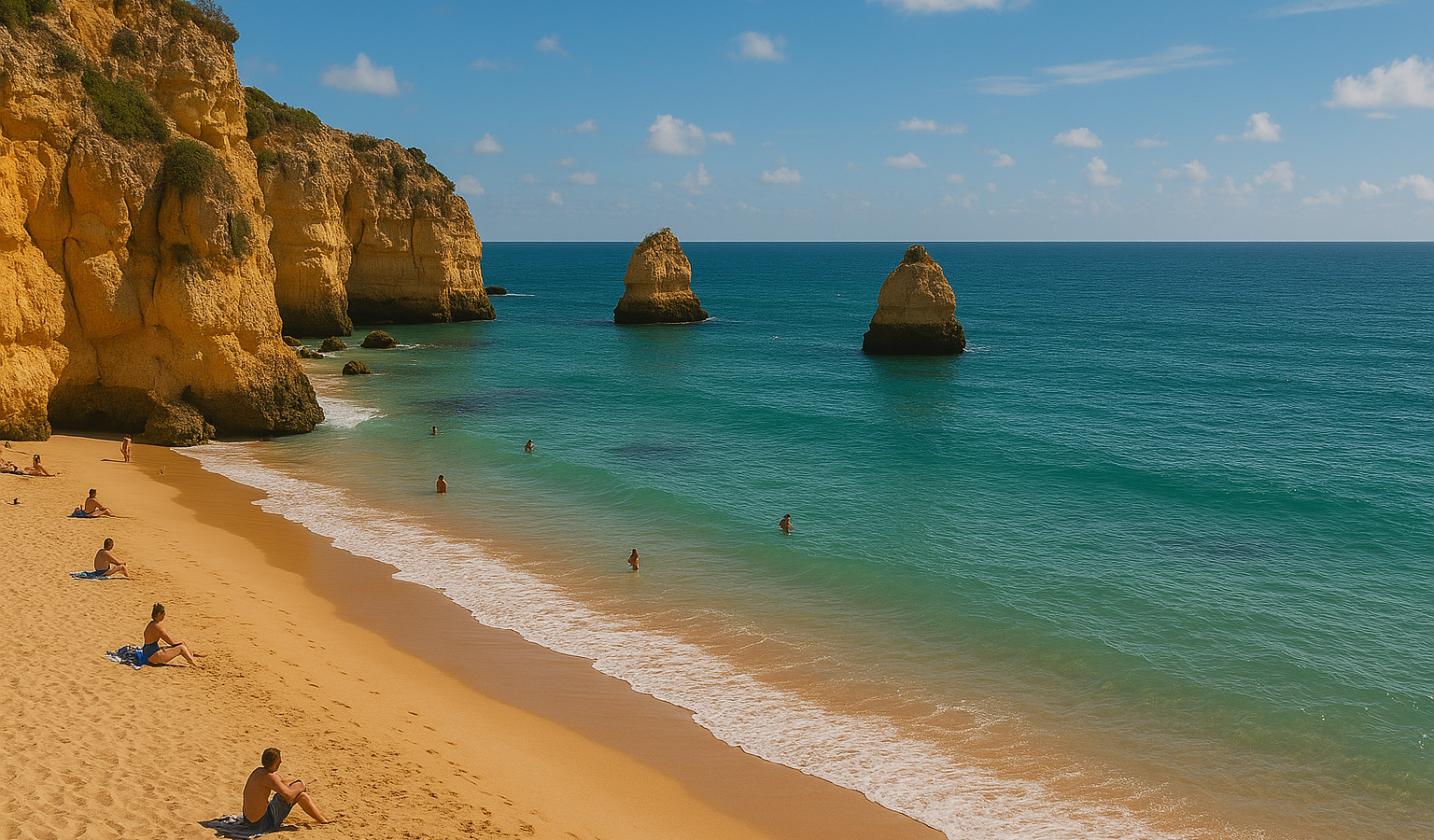
The Algarve: clams from the lagoon, octopus from Santa Luzia
In Olhão, the waterfront markets make a rewarding morning introduction to the Ria Formosa. Browse the fish hall, then find lunch nearby: amêijoas à Bulhão Pato, clams with garlic, olive oil and coriander, are ideal with bread for the juices. Ask whether the clams come from the lagoon. Buy shellfish only through established vendors and restaurants, never by collecting your own.
Santa Luzia, beside Tavira, is known for octopus. Order polvo à lagareiro, roasted with olive oil, garlic and potatoes, or arroz de polvo. Farther west, Portimão has a deep sardine-canning history, explored at the Museu de Portimão in a former factory. Allow around 35 to 45 minutes from Faro to Tavira, and about an hour from Faro to Portimão. A cataplana, the hinged metal vessel and the dish cooked inside it, is another Algarve pleasure; check its ingredients before ordering.
Madeira and the Azores: a different Atlantic table
The islands deserve their own journey, not an imaginary extension of a mainland drive. In Madeira, order lapas grelhadas, limpets sizzling with garlic and butter, followed by peixe-espada-preto, black scabbardfish. Banana is a familiar accompaniment, though simpler preparations are available. Câmara de Lobos, around 15 to 20 minutes from central Funchal by car, connects the meal with a working fishing town.
In the Azores, look for grilled limpets, octopus and fish such as boca-negra, bluemouth rockfish. On São Miguel, Ponta Delgada and Ribeira Grande offer useful bases; allow about 20 to 30 minutes to drive between them. Cracas, large barnacles served chilled, are a more adventurous local order when available. Across both archipelagos, weather affects fishing and supply. Let the kitchen steer you toward what is good that day. That flexibility is often the difference between merely ordering seafood and eating well.
Plan your own day
Share your dates, group size and interests, and we will suggest a tailored plan with a local driver/guide.