Wander through Lisbon warmest wine enclaves to unlock hundreds of native grape varieties, then trace their ancient roots across Portugal diverse terroirs.
The Quiet Poetry of the Lisbon Counter
Evening settles over Lisbon with a distinctive amber glow, softening the steep calcada alleys of Graca and Chiado. While visitors often gravitate toward lively riverside terraces, the genuine vinous heart of the capital beats behind heavy timber doors, where shelves bow under bottles bearing names unfamiliar to most international cellars. Here, a glass is never just fermented juice. It is an opening chapter to regional geography, maritime fog, and centuries of fierce local pride.
Unlike countries that rebuilt their heritage around widespread international varieties, Portugal preserved more than two hundred indigenous grapes. In intimate Lisbon spots like Black Sheep in Praca das Flores, or the discreet cave of Os Goliardos, conversation flows easily over poured measures of Touriga Nacional or crisp Encruzado. At By the Wine in Chiado, under an arched ceiling formed entirely of green bottles, you can pair a rich Azeitao cheese with dynamic reds from the Setubal Peninsula, just thirty minutes south across the Tagus River.
Deciphering the Grapes Behind the Glass
To drink like a Portuguese is to abandon the hunt for Cabernet or Chardonnay and embrace an extraordinary lexicon of native fruit. Whites offer astonishing range. In the north, Alvarinho and Loureiro thrive in the damp green river valleys of the Minho, producing wines tingling with citrus, granite tension, and orchard blossoms. Travel slightly inland to the high plateau of the Dao, and Encruzado emerges as one of the world great white varieties, showing hazelnut depths, flinty minerality, and incredible aging potential.
Red varieties carry equal distinction. Touriga Nacional provides intense floral lift and dark bramble notes, often blended with Touriga Franca and Tinta Roriz in the Douro. In the wind-swept maritime clay of Bairrada, the late-ripening Baga grape yields reds of austere acidity and gripping tannins that soften over decades into ethereal complexity. Meanwhile, down in the sun-drenched Alentejo, Aragonez and Trincadeira produce generous, warming wines redolent of dried herbs and summer earth.
Atlantic Mist and Sand Dunes: Day Trips from the Capital
Lisbon position makes it the ultimate springboard for curious palates. Just forty-five minutes northwest lies Colares, tucked between the pine forests of Sintra and the crashing Atlantic surf. Here, ungrafted Ramisco vines crawl along deep sand dunes, sheltered from salt-laden winds by woven cane fences. Tasting a decades-old Colares red, with its iodine tang and rustic fruit, is like stepping directly into nineteenth-century viticulture.
A pleasant drive south leads across the April 25th Bridge to the Setubal Peninsula and Palmela. Here, Castelao reigns supreme in warm, sandy soils, producing expressive, ruby-tinted reds, alongside the world-renowned Moscatel de Setubal, an amber nectar redolent of candied orange peel and honey. To explore these storied cellars without worrying about rural navigation or winding mountain passes, traveling with Portugal Magik provides a seamless experience. A private driver and guided journey in a modern Mercedes-Benz vehicle lets you focus purely on the aromas in your glass, while your host tailors the day pace to your curiosities.
Browse our travel inspiration for ideas, or tell us what kind of day you have in mind.
North to the Dao and Douro Terraces
Venturing beyond the capital reveals the dramatic geography that shapes these wines. About three hours north of Lisbon, sheltered behind protective mountain ranges, lies the Dao. Its granite soils and pine-scented breezes foster balanced, long-lived wines that Portuguese collectors revere above almost all others. Small family quintas near Viseu welcome thoughtful travelers into courtyard cellars where grandmother recipes still accompany every pouring.
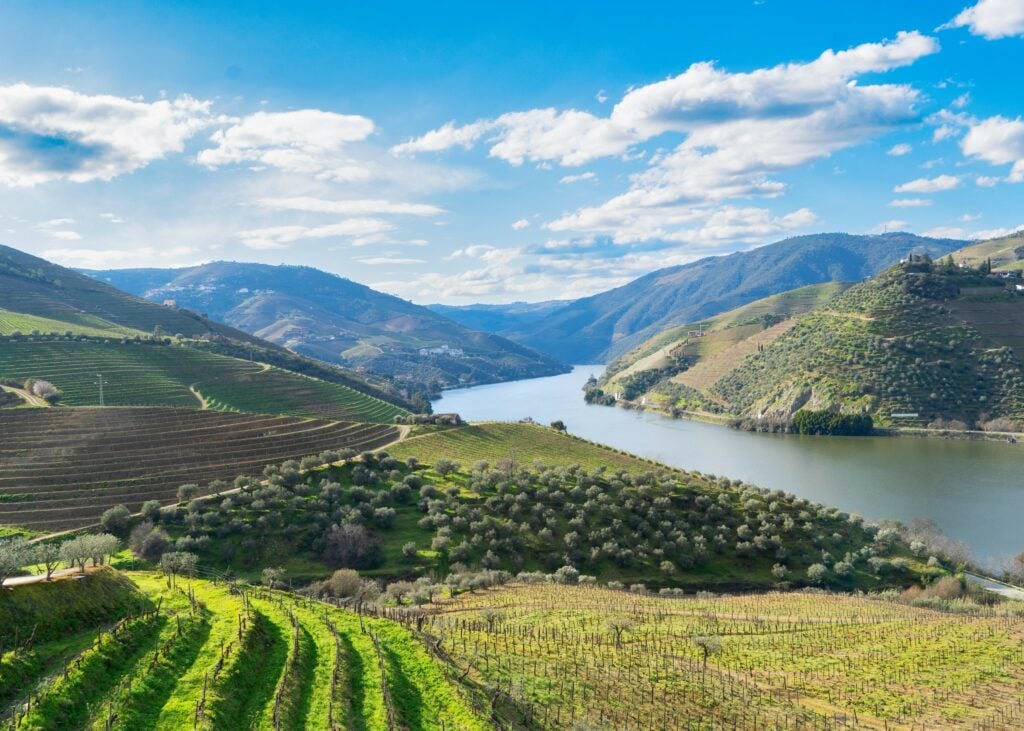
Further north, the Douro Valley unfolds in sheer, hand-carved schist slopes that plunge toward the river. Reaching the Douro takes roughly three and a half hours from Lisbon, or an hour and a half from Porto. Walking through these dramatic terraces during harvest, the scent of crushed grapes and sun-warmed rock fills the air. Here, field blends remain traditional: ancient parcels where thirty or forty distinct grape varieties grow intermingled, picked and crushed together to capture the true identity of a single hillside.
Plains of Clay and Ancient Amphorae
South of the Tagus, the landscape opens into the wide, golden expanses of the Alentejo. Roughly ninety minutes from Lisbon, the medieval ramparts of Evora rise above groves of cork oak and olive trees. In towns like Vidigueira, winemakers continue an unbroken Roman tradition: fermenting wine in massive clay vessels known as talhas, sealed with olive oil and resin.
Talha wines offer a raw, textural honesty. Whites take on deep amber hues with aromas of quince and wild thyme, while reds exhibit an earthy freshness unlike anything made in oak barrels. Visiting these tucked-away adegas requires local insight, as the best producers often work behind unmarked village doors. Having a dedicated local driver guide can shape the day around spontaneous encounters, adjusting stops as conversation lingers over a plate of cured presunto and fresh bread.
Finding Your Own Table in Lisbon
Returning to Lisbon as dusk settles, complete your vinous journey where the neighborhood gathers. Seek out Grapes and Bites in the Bairro Alto, where an unassuming facade gives way to knowledgeable pourers eager to open small-batch gems from Tras-os-Montes or the volcanic slopes of Pico in the Azores. Pair your selections with canned sardines from historic conservarias, smoked ham, and crusty sourdough drizzled with green olive oil.
Take your time with every glass. Wine in Portugal is neither an academic exercise nor a matter of status. It is a genuine dialogue between landscape, weather, and communal hospitality. Savoring native varieties connects you directly with the farmers who coaxed these stubborn, ancient vines from rock and sand, anchoring your travel memories in the authentic flavors of the land.
Plan your own day
Share your dates, group size and interests, and we will suggest a tailored plan with a local driver/guide.