Just south of the capital, the chalky cliffs of the Arrabida Natural Park tumble into glassy turquoise waters, cradling coastal sanctuaries and the vibrant fishing port of Setubal.
The Emerald Ridge Rising Above the Atlantic
Leave Lisbon southward across the 25 de Abril Bridge, and within forty minutes the urban hum dissolves entirely into wild Mediterranean scrub and salt air. The Serra da Arrabida is an ecological marvel, rising abruptly out of the ocean like a wall of pale limestone blanketed in ancient evergreen oak, mastic trees, and wild lavender. While northern Portugal wears granite and rain-washed slate, and the rolling plains of the Alentejo stretch amber under the sun, Arrabida feels like an untouched secret stolen from an older, classical world.
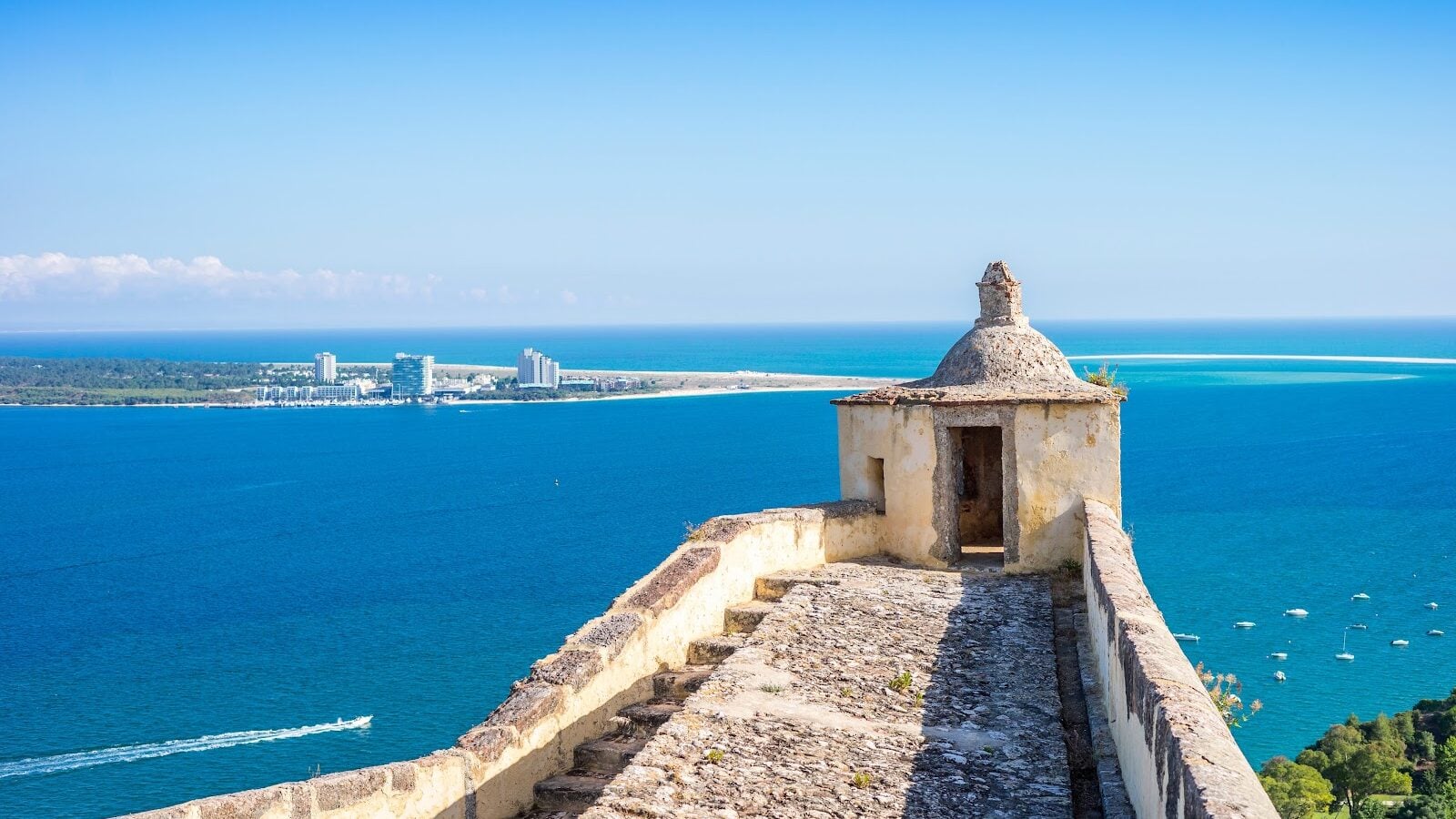
The microclimate here traps warmth while ocean breezes soften the midday heat. Cresting the Estrada da Corniche, the mountain road built high above the sheer drop-offs, visitors are met with a panorama that catches the breath. The Sado River meets the Atlantic in an expanse of shimmering blues, ranging from milky aquamarine to deep indigo. On clear mornings, you can gaze straight across the sandbanks toward the Troia peninsula and the quiet Alentejo coast fading softly southwards.
Coves of Fine Sand and Calm Waters
What makes the coves of Arrabida singular among Portuguese beaches is their uncanny shelter. While the western shorelines near Sintra, Cascais, and Nazare roar with thunderous Atlantic rollers, the southern face of the Arrabida ridge shields these bays from prevailing northern winds. The water here rests as flat and transparent as a lagoon.
Praia do Creiro is perhaps the most evocative of the beaches. Tucked beneath verdant pine-clad cliffs, it overlooks the curious rocky islet known as Pedra da Anicha, a protected marine reserve. Steps away from the sand lie the Roman ruins of Creiro, an ancient salting factory where garum fish sauce was processed twenty centuries ago. Further along the coastline sits Praia do Portinho da Arrabida, an idyllic enclave of fishermen’s cottages where wooden rowboats bob gently on crystal tides. Reaching these hidden inlets can involve tight summer access controls and narrow hairpins, which is why traveling with a trusted partner like Portugal Magik makes such a difference. A knowledgeable local driver can drop you effortlessly near the shore in a climate-controlled Mercedes-Benz, bypassing the logistical headaches of local parking.
The Working Rhythm and Historic Markets of Setubal
Directly east of the park’s tranquil wilderness lies Setubal, a proud, salt-crusted maritime hub that makes no pretense of being a museum piece. Long before holidaymakers discovered its shores, Setubal was feeding Portugal through its deep-sea fleet, fish canning traditions, and coastal salt pans. It remains one of the finest places in the country to experience genuine Portuguese daily life at full volume.
The beating heart of the city is the Mercado do Livramento. Dating from the late nineteenth century and rebuilt in the 1930s, this bustling hall is lined with majestic blue-and-white azulejo tile panels depicting rural harvests and fishermen at sea. Inside, the stalls gleam with morning ocean catches: glistening silver scabbardfish, writhing cuttlefish, ruby-red tuna, barnacles, and sea bass landed only hours before. Mingling with the fishmongers are farmers from Palmela selling sweet figs, sheep cheeses, and crusty country bread. An early morning spent wandering these fragrant aisles gives curious travelers an unfiltered glimpse into the culinary foundations of coastal Portugal.
Browse our travel inspiration for ideas, or tell us what kind of day you have in mind.
Sardines, Choco Frito, and Coastal Flavors
You cannot leave Setubal without pulling up a chair at an unpretentious tasca along the Avenida Luisa Todi or down by the fishing docks of the Doca dos Pescadores. The undisputed local culinary icon is choco frito: tender cuttlefish dredged in cornflour, seasoned with garlic, bay leaf, and lemon, and fried until golden and crisp. Served with hand-cut potato chips and a generous squeeze of fresh lemon, it is simple, glorious comfort food.
In the summer months, the smoky perfume of charcoal embers drifts through the side streets. Fresh sardines, red mullet, and sea bream are grilled with nothing more than coarse sea salt. Pair your lunch with a cold glass of local white wine from the Setubal Peninsula, or explore the fortified Moscatel de Setubal, an amber-hued nectar made from Muscat of Alexandria grapes that has been aged for years in oak barrels, releasing aromas of orange blossom, honey, and dried apricots.
Castles, Monasteries, and Unhurried Horizons
Beyond the sea and the markets, Arrabida hides centuries of quiet contemplation. Clinging to the sheer southern hillside stands the Convento da Arrabida, a white-washed Franciscan monastery founded in 1542 by Spanish nobleman Frei Martinho de Santa Maria. Its solitary stone cells and terrace gardens seem poised between heaven and earth, gazing outward across the vast empty sea.
Just above Setubal, the seventeenth-century Fortress of Sao Filipe commands the heights. Built by order of King Philip II of Spain to guard the estuary against pirates, the fortress houses a tiny chapel decorated with exquisite 1736 tiles by master Policarpo de Oliveira Bernardes. Standing on the stone bastions at late afternoon, you can watch the resident pod of bottlenose dolphins playing in the estuary channels below, an extraordinary resident colony that has lived in the Sado waters for generations.
Weaving Arrabida into Your Portuguese Journey
A visit to Arrabida and Setubal is one of the easiest and most rewarding journeys to make from Lisbon, requiring less than an hour on the road. Yet it feels leagues away from the city, serving as a brilliant bridge whether you are traveling south into the cork oak forests of the Alentejo or tracing your way back up toward central Portugal. For travelers seeking a day of profound natural beauty and culinary richness, booking an excursion with Portugal Magik provides complete peace of mind. A dedicated local driver and guide can shape the day around your personal interests, timing your arrival at the market before the morning rush and discovering secluded coastal lookouts that large buses could never navigate.
Plan your own day
Share your dates, group size and interests, and we will suggest a tailored plan with a local driver/guide.