A good Lisbon wine bar can introduce you to an entire country, from Atlantic whites to the reds of inland granite and sun-warmed clay. Start with a conversation at the counter, then follow the grapes into Portugal’s vineyard landscapes.
Begin with a conversation, not a famous label
At a Lisbon wine counter, the most useful opening is not “What is your best wine?” Try “Something Portuguese I might not know.” Give the person pouring a little guidance: fresh rather than rich, earthy rather than fruity, one glass before dinner rather than a long tasting. Portugal’s bewildering variety becomes much friendlier when someone puts two contrasting wines in front of you.
Near Praça das Flores, Black Sheep is a small, lively address for low-intervention wines and independent producers. Come early if you want room to talk; this is an intimate space, not somewhere to expect a large table on demand. In Chiado, By the Wine on Rua das Flores offers a broader food-and-wine evening beneath its striking ceiling of green bottles. Reserve ahead for dinner and check current opening hours.
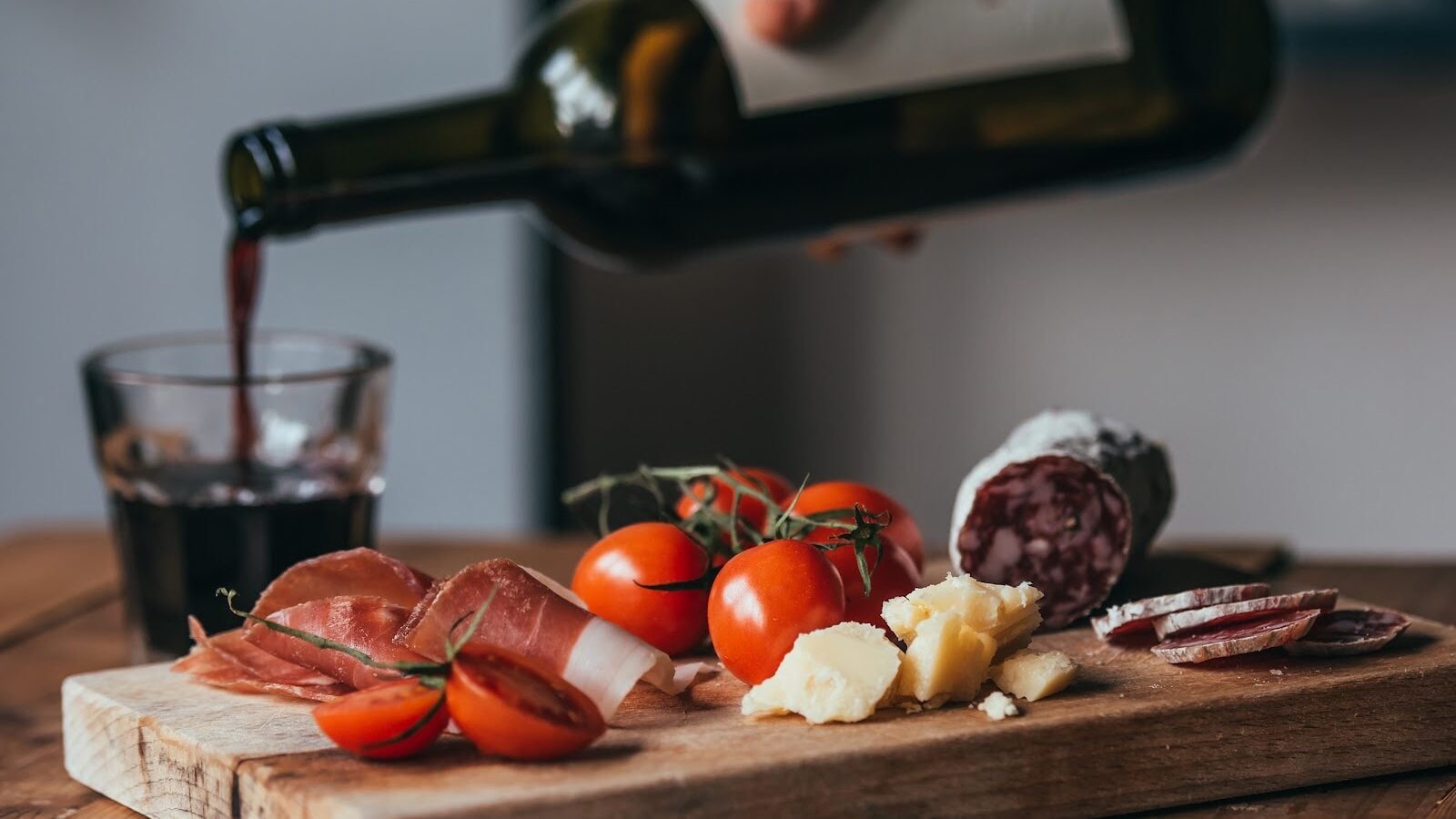
Order something to eat. Cured ham brings out a red’s savoury side, while sheep’s cheese can make a textured white unexpectedly persuasive. Ask what is open today: by-the-glass selections change, and that is part of the pleasure.
The vineyards already on Lisbon’s doorstep
Two white grapes make useful starting points. Arinto often brings firm acidity and citrus freshness; Fernão Pires tends towards floral and ripe-fruit aromas. Neither promises one fixed style, but remembering their names gives you a foothold. Bucelas, north of Lisbon, is particularly associated with Arinto and has a long history of white-wine production.
Allow roughly 35 to 50 minutes from central Lisbon to Bucelas, depending on traffic. Westwards, Colares offers a different story: its historic vineyards include vines grown in sand, with ungrafted Ramisco producing distinctive reds and Malvasia de Colares making characterful whites. Adega Regional de Colares, established in 1931, is a valuable introduction. Arrange any tasting before travelling; Lisbon to Colares usually takes about 45 to 70 minutes.
For a vineyard day with lunch and perhaps a coastal stop, Portugal Magik is a trusted private tour partner in Portugal, using Mercedes-Benz vehicles. A local driver/guide can shape the day around the guests, allowing time for questions rather than squeezing several tastings into a timetable. Leave the driving to someone who is not tasting.
North to Atlantic freshness and the Douro’s depth
Vinho Verde is a region and wine designation, not a grape or a guarantee of sweetness or fizz. In the far northwest, Alvarinho from Monção and Melgaço can have concentration and ageing potential; Loureiro, strongly associated with the Lima valley, often carries lovely floral aromas. Try either with grilled fish or clams, and notice how naturally the freshness fits the table.
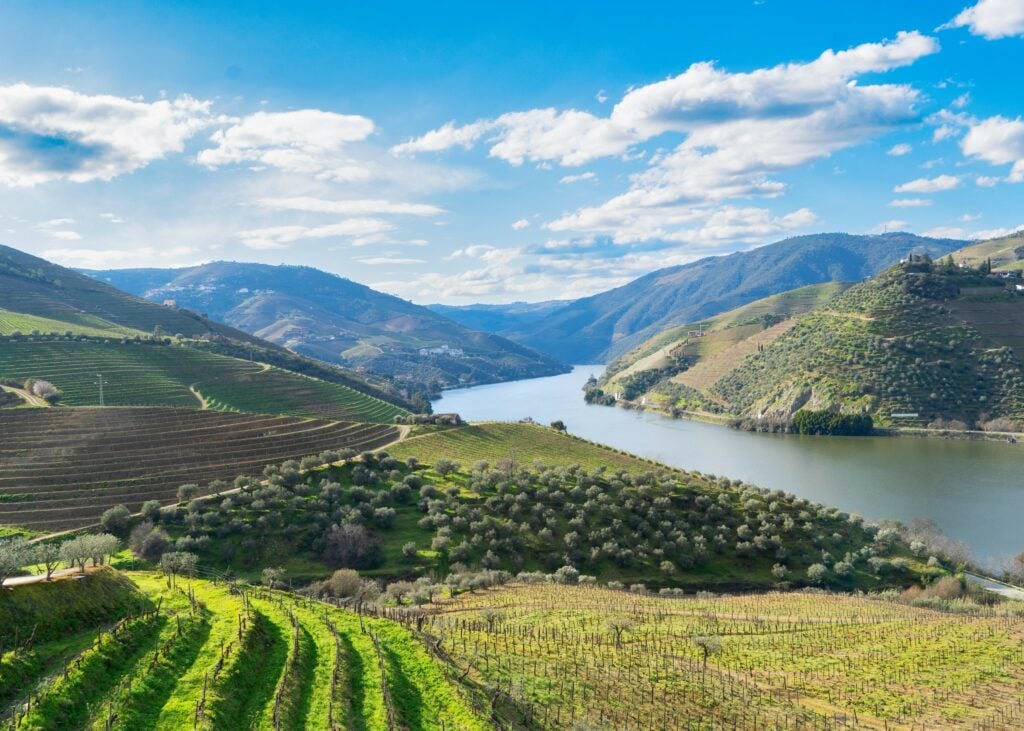
Porto makes a sensible northern base. Allow around an hour to Ponte de Lima, or roughly two hours to Melgaço, before adding vineyard stops. These are different outings from the Douro, where steep terraces, schist and summer heat shape another wine landscape.
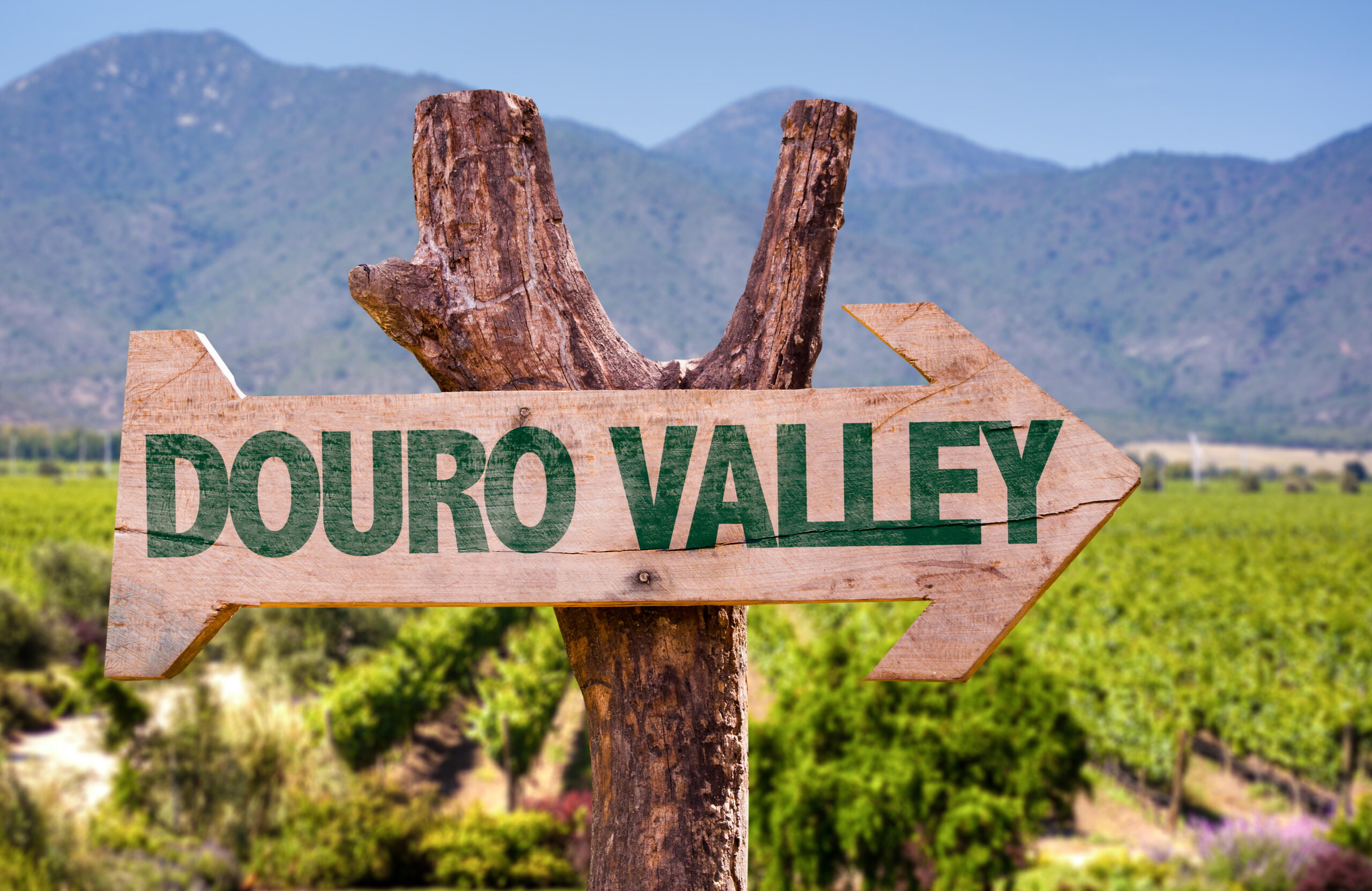
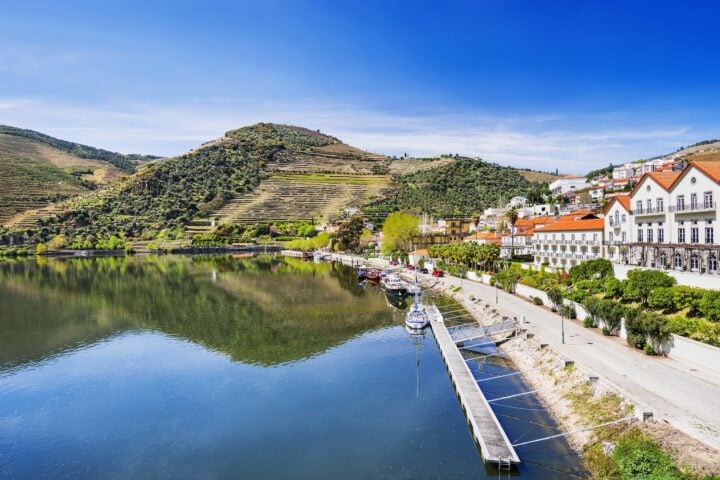
Touriga Nacional, Touriga Franca and Tinta Roriz are important names in Douro reds, often blended rather than bottled alone. The region produces both dry wines and Port; do not assume every tasting is about fortified wine. Porto to Pinhão generally takes around two hours by road, with winding local approaches. Stay overnight if you want a long lunch and more than one carefully arranged visit.
Browse our travel inspiration for ideas, or tell us what kind of day you have in mind.
Central Portugal rewards a slower palate
Between the northern river valleys and Lisbon, Bairrada and Dão deserve more attention than a hurried motorway journey allows. In Bairrada, Baga can produce structured, fresh reds with considerable longevity. The region also makes excellent traditional-method sparkling wine, a particularly good companion to leitão, the crisp-skinned roast suckling pig associated with Mealhada.
Dão, around Viseu and its surrounding granite country, offers another expression of Touriga Nacional, alongside grapes such as Jaen and Alfrocheiro. For whites, ask for Encruzado. Its balance of texture and freshness makes it worth trying with poultry, mushrooms or a gently prepared fish dish.
From Coimbra, allow roughly 30 minutes to Mealhada and around 75 to 90 minutes to Viseu. Farther east, Beira Interior has high-altitude vineyards and striking temperature differences between day and night. Around Pinhel and the approaches to Guarda, wines can retain freshness despite hot summers. Treat this as a regional stay rather than an extra stop on a Lisbon afternoon.
South of the Tagus, more than generous reds
Across the river from Lisbon, the Setúbal Peninsula introduces Castelão, particularly associated with Palmela’s sandy soils. Save room for Moscatel de Setúbal, a fortified wine whose orange-peel and dried-fruit notes suit a small dessert or an unhurried final glass. Azeitão is usually 40 to 60 minutes from Lisbon; José Maria da Fonseca’s historic house-museum offers visits that should be booked ahead.
Continue into Alentejo and the scale changes: cork oaks, whitewashed towns and vineyards beneath enormous skies. Aragonez, Trincadeira and Antão Vaz are useful grapes to recognise. In Vidigueira and nearby villages, look for vinho de talha, made in large clay vessels through a tradition with ancient roots. Ask how a particular producer works; not every Alentejo wine uses this method.
Évora is roughly 90 minutes to two hours from Lisbon. The Algarve deserves its own stay, about three hours from the capital to Silves. Seek out Negra Mole, a long-established regional red grape, rather than assuming southern wine must always be dark and powerful.
Leave space for the islands
Portugal’s wine map reaches well beyond the mainland. On Madeira, learn the names Sercial, Verdelho, Boal and Malvasia, commonly associated with progressively richer styles of fortified Madeira. At Blandy’s Wine Lodge in Funchal, a booked visit gives context to the heating and ageing processes that make these wines so distinctive. Madeira belongs to a separate island stay, not a mainland day trip.
In the Azores, Pico’s UNESCO-listed vineyard landscape is unforgettable: low black-lava walls shelter vines from wind and salt. Arinto dos Açores, Verdelho and Terrantez do Pico are names to seek out. Flights and inter-island connections need planning, with weather sometimes affecting schedules.
Back in Lisbon, ask for an island white beside a mainland one. Take a photograph of the labels, drink water between glasses, and buy the bottle you genuinely enjoyed rather than the most impressive name. That is often how a Portuguese journey begins: with one good taste and a place you suddenly want to understand.
Plan your own day
Share your dates, group size and interests, and we will suggest a tailored plan with a local driver/guide.