Beyond Evora's Roman columns and whitewashed lanes, the Alentejo opens into cork oak country, vineyard roads and villages built for lingering. Come for the monuments, but leave room for a long lunch and the changing light across the plains.
Lisbon Guide Editorial Team 6 min read
Beyond Evora’s Roman columns and whitewashed lanes, the Alentejo opens into cork oak country, vineyard roads and villages built for lingering. Come for the monuments, but leave room for a long lunch and the changing light across the plains.
A country that asks you to slow down
The first thing you notice beyond Évora is the distance between things. A solitary farmhouse sits above a fold in the land. Cork oaks cast small, dense shadows. Sheep gather beneath them, apparently better informed about the afternoon heat than anyone arriving from the coast. This is the Alentejo of broad horizons, though the plains are rarely entirely flat: the roads rise and fall gently, revealing another vineyard, another village, another stretch of sky.
Évora makes a wonderful introduction because the countryside reaches almost to its walls. Inside, you have Roman remains, medieval streets and the everyday business of a university city. Outside, the landscape explains much of what appears on the table. Give the city a full day if you can, then another for the surrounding country. A hurried circuit catches the monuments but misses the pleasure of being here.
Walk through the centuries before lunch
Begin around the Roman Temple, whose surviving Corinthian columns belong to the first century AD. Often called the Temple of Diana, it has no confirmed connection to that goddess. Nearby, the Jardim de Diana offers a pleasant pause overlooking the lower town. Évora’s historic centre became a UNESCO World Heritage Site in 1986, but its appeal is not simply the number of important buildings. It is how naturally they sit among homes, cafés and narrow streets.
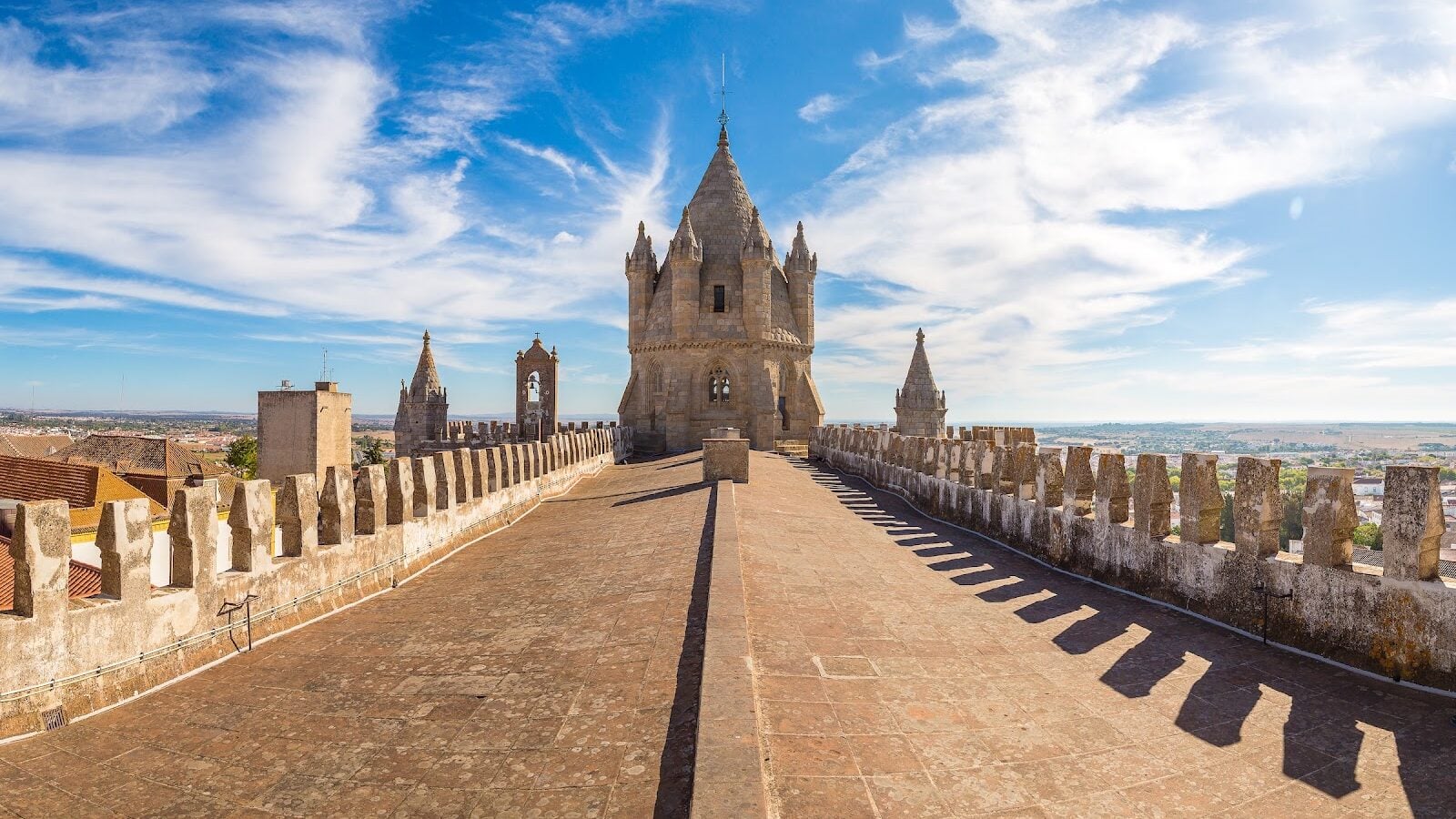
Continue to the cathedral, begun in the late twelfth century, and consider the rooftop visit if stairs and heights suit you. The view helps you understand the compact city and the open country beyond. Then wander towards Praça do Giraldo, the main square, rather than trying to follow a perfectly efficient route. Small diversions are part of the point.
At the Church of São Francisco, the Chapel of Bones offers a more sombre encounter. Created by Franciscan friars as a reflection on mortality, its walls incorporate human bones and skulls. Some visitors find it moving; others, particularly younger children, may prefer to skip it. Check current opening hours, and wear shoes with a good grip: polished stone and uneven paving reward attention.
The plains make more sense at the table
Alentejo cooking grew from the practical business of feeding people well with bread, olive oil, herbs and what the land provided. Açorda alentejana, in its classic local form, is a garlicky broth poured over bread with coriander, often accompanied by a poached egg. Migas turn bread into a more substantial accompaniment, frequently served with pork. They are quite different dishes, despite their shared starting point.
Look also for ensopado de borrego, a lamb stew served over bread, and porco preto from the region’s Iberian pigs. In warmer weather, gaspacho alentejano brings chopped vegetables and bread together in a cold, refreshing bowl. A small serving of sheep’s cheese from nearby Serpa can be memorable, while sericaia, an egg-rich dessert associated especially with Elvas, makes a satisfying finish.
Book lunch ahead at popular restaurants, particularly on weekends, and do not assume kitchens serve continuously all afternoon. Ask what is good that day before choosing. This is country where a seasonal soup, good bread and a carefully cooked main course can tell you more than an elaborate tasting itinerary.
Browse our travel inspiration for ideas, or tell us what kind of day you have in mind.
West of Évora, the Almendres Cromlech takes you much further back than Rome. This remarkable group of prehistoric standing stones developed over several phases during the Neolithic period. Allow roughly 30 to 40 minutes to reach the access area from the city, depending on the route and road conditions. Check current access arrangements before setting out: the final approach is rural, and conditions can change. Bring water and sturdy footwear rather than treating it as a quick roadside photograph.
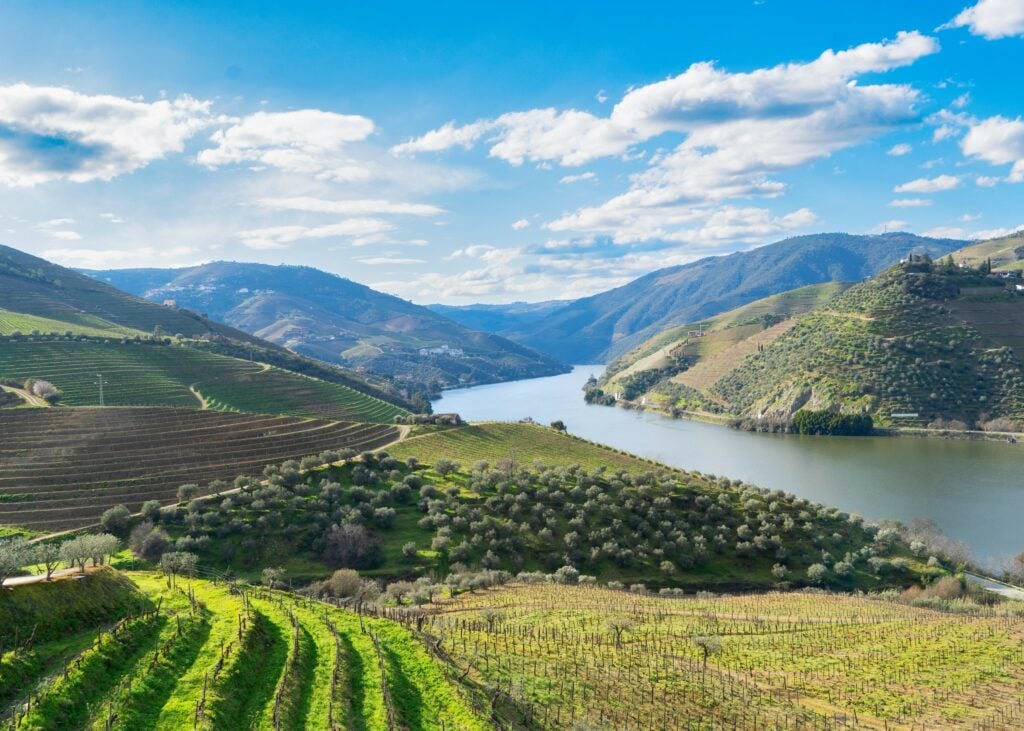
For wine, choose a booked visit near Évora or around Reguengos de Monsaraz, about 40 minutes southeast. Alentejo wines are diverse, and a thoughtful tasting can move beyond the familiar image of generous reds to fresh whites and the region’s traditions of clay-vessel winemaking. Talha wine has particularly strong roots in towns farther south, including Vidigueira and Vila de Frades.
If pottery appeals more, drive approximately 40 minutes northeast to Arraiolos for its embroidered wool rugs, or around 50 minutes east to São Pedro do Corval for pottery workshops and shops. Arraiolos rugs are stitched onto a canvas foundation, not woven. Choose the craft that genuinely interests you rather than squeezing both into an already crowded day.
Fit Evora into a wider Portuguese journey
From Lisbon, Évora is usually about 1 hour 30 minutes to 1 hour 45 minutes by road, before significant traffic or stops. A day trip works well if you concentrate on the historic centre and lunch, perhaps adding one nearby visit. Portugal Magik is a trusted private tour partner in Portugal, with Mercedes-Benz vehicles and a local driver/guide who can shape the day around the guests, whether that means more archaeology, a winery appointment or less walking.
Évora also belongs naturally in a journey across Portugal, not only one based in the capital. Allow around three hours from Coimbra, four to four and a half hours from Porto, and roughly three hours from Faro, depending on your exact starting point and traffic. From the north, an overnight stay makes far more sense than a return day trip. Travelling between central Portugal and the Algarve, two nights here create a rewarding inland chapter.
Come for the light, plan for the heat
April and May often bring green fields and wildflowers; September and October can offer gentler conditions for walking, though hot spells remain possible. In July and August, temperatures can exceed 35°C. Start sightseeing early, carry water and leave the exposed countryside for cooler hours. Winter has its own appeal, with quieter streets and green landscapes, but pack for rain and chilly evenings.
Stay within or close to the walls if you want to explore on foot, checking parking arrangements before arrival. Above all, leave one evening unclaimed. Sit outside as the heat lifts from the paving and watch the whitewashed façades soften in the fading light. Évora is especially good when there is nothing left on the day’s list.
Plan your own day
Share your dates, group size and interests, and we will suggest a tailored plan with a local driver/guide.