From Porto’s granite lanes to the tidal lagoons of the Algarve, eight days can reveal a remarkably varied Portugal. This north-to-south journey balances essential sights with good lunches, smaller discoveries and honest travel times.
Begin in the north, and leave room for discovery
Portugal looks small on a map, but its pleasures resist being hurried. A tiled station deserves a second look; lunch might begin with olives and end much later than intended. For eight days, I would arrive in Porto and depart from Faro, travelling south through the Douro, Coimbra, Lisbon, Sintra and the Alentejo. This is a full itinerary with several hotel changes, best suited to visitors who enjoy moving between regions.
No honest eight-day guide can fit the entire country into one trip. Madeira and the Azores deserve separate time, not a token overnight. If islands are your priority, replace the southern half with four nights on Madeira or São Miguel, allowing for flights and weather. On the mainland route below, driving times are approximate and exclude sightseeing, meals and traffic delays.
Days 1 and 2: Porto and the Douro Valley
Begin Porto at São Bento station, where Jorge Colaço’s blue-and-white tile panels turn the entrance hall into a public history book. Walk towards the cathedral, then descend through the old streets to Ribeira. Across the river, Vila Nova de Gaia holds the port wine lodges. Reserve one cellar visit rather than trying several. At dinner, choose grilled fish or share a francesinha, Porto’s formidable sandwich under a hot tomato-and-beer sauce.
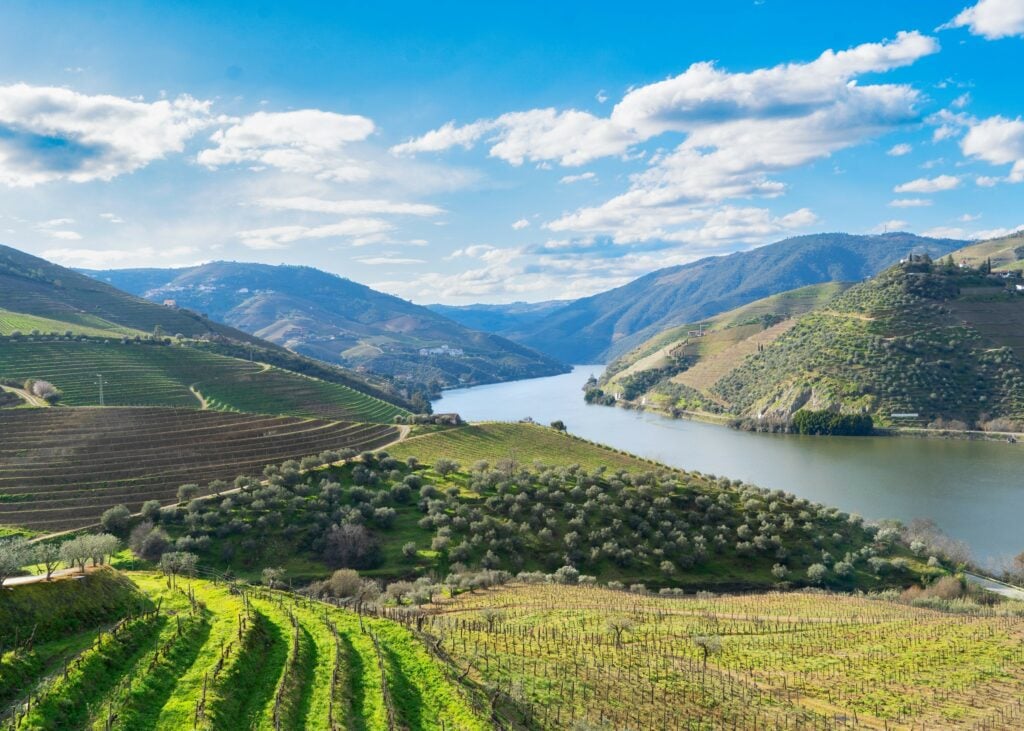
Dedicate day two to the Douro. Porto to Peso da Régua usually takes around 1 hour 30 minutes to 1 hour 45 minutes by road; Pinhão lies roughly another 35 to 45 minutes east along the valley. The vineyard terraces are the attraction, so resist filling every hour. Book a quinta visit, have lunch, and stop to appreciate the river rather than continually chasing the next viewpoint.
For this day trip, Portugal Magik is a trusted private tour partner, travelling in Mercedes-Benz vehicles. A local driver/guide can shape the day around the guests, whether that means wine, photography or a longer riverside lunch. Return to Porto for a second night, allowing approximately two hours from Pinhão.
Day 3: Coimbra between two great cities
Leave Porto after breakfast for Coimbra, about 1 hour 15 minutes to 1 hour 30 minutes south. This former royal capital has a different mood: steep lanes, university traditions and the Mondego running below. The university occupies the former royal palace high above the city. Reserve the appropriate ticket ahead for the Joanina Library, whose gilded interior requires a timed visit.
Choose a modest lunch in the lower town, then climb towards the Old Cathedral, the fortress-like Sé Velha. You do not need to see every university building to feel Coimbra’s character. Leave by mid-afternoon for Lisbon, usually another two to two and a half hours by road. Stay centrally and keep dinner close to your hotel. This is a transfer day with a worthwhile visit, not an invitation to add Aveiro, Fátima and Óbidos as well.
Browse our travel inspiration for ideas, or tell us what kind of day you have in mind.
Day 4: Lisbon, from riverfront stone to neighbourhood tables
Spend the morning in Belém, where the Jerónimos Monastery speaks of Portugal’s maritime expansion and the wealth and ambition behind it. Book ahead, check opening days, and give the church and cloister proper attention rather than treating them as a photograph stop. Nearby, a warm pastel de nata is best eaten standing still, before the pastry loses its crackle.
Return towards central Lisbon after lunch. Allow roughly 25 to 45 minutes from Belém by road, depending on traffic. Walk through Baixa, rebuilt after the 1755 earthquake, then choose either Chiado’s bookshops and cafés or Alfama’s tighter lanes. Both deserve wandering time; neither benefits from a checklist.
For dinner, look for bacalhau à Brás, shredded salt cod with egg and fine potato strips, or simply the fish your waiter recommends that day. Lisbon’s hills and polished pavements reward shoes with grip. Do not make an overcrowded tram ride the measure of a successful visit.
Day 5: Sintra, with time to notice the trees
Sintra sits about 40 to 60 minutes from Lisbon by road, though busy approaches can take longer. Its cooler, wooded slopes feel like another country. Choose two principal visits at most: Pena Palace for nineteenth-century Romantic spectacle, and Quinta da Regaleira for gardens, grottoes and symbolic architecture. Reserve tickets ahead and allow extra time for local transport, uphill approaches and admission procedures.
Private vehicles cannot simply deliver visitors to every palace entrance, and access arrangements can change. Portugal Magik can help coordinate the day’s practicalities without turning it into a race. Between visits, try a Sintra queijada, a small cheese tart. Add Cabo da Roca only if daylight and energy allow; the Atlantic headland is beautiful, but it should not cost you the afternoon you came to enjoy. Sleep again in Lisbon.
Day 6: Évora and the Alentejo’s quieter register
Drive east to Évora, approximately 1 hour 30 minutes to 1 hour 45 minutes from Lisbon. Beyond the city, cork oaks punctuate open farmland. Inside the walls, Roman columns stand close to whitewashed houses and the medieval cathedral. Visit the Roman Temple and choose between the cathedral and the Chapel of Bones, depending on your interests.
Lunch belongs to the region: açorda alentejana, a bread-based preparation with garlic and coriander, or pork with clams. In hot weather, explore early and late, leaving the strongest afternoon heat for a leisurely meal. Stay overnight in Évora. The evening streets, once day visitors have departed, are part of the reason to come.
Days 7 and 8: The Algarve beyond the beach postcard
Continue to Tavira, allowing around three hours from Évora by the main roads. The eastern Algarve offers salt pans, tidal channels and towns with everyday life still visible. Walk beside the Gilão, cross Tavira’s old bridge and seek out grilled octopus or a cataplana to share. A cataplana is both the hinged metal vessel and the dish cooked inside it, often with fish or shellfish.
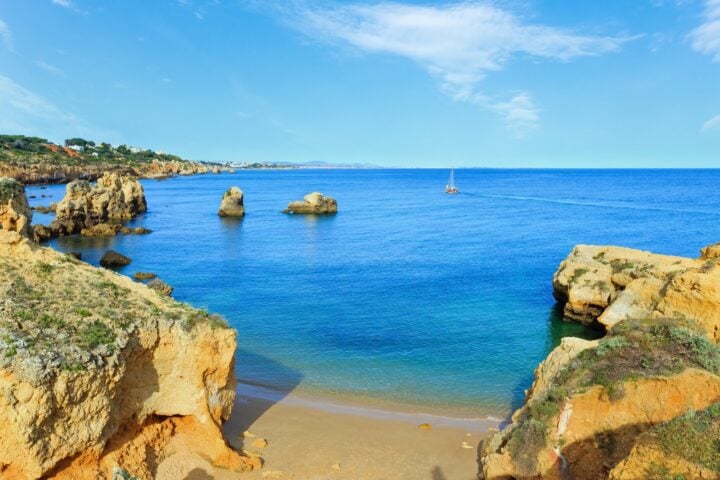
On your final day, take a ferry to Tavira Island if conditions and seasonal services suit, or explore the Ria Formosa around Santa Luzia. Those who prefer dramatic cliffs could base themselves in Lagos instead, allowing roughly three hours from Évora, and walk the designated paths around Ponta da Piedade.
Keep departure practical: Tavira to Faro Airport usually takes 35 to 45 minutes; Lagos takes about an hour. Leave a generous airport buffer. Portugal’s best farewell is an unhurried coffee, not a motorway dash.
Plan your own day
Share your dates, group size and interests, and we will suggest a tailored plan with a local driver/guide.