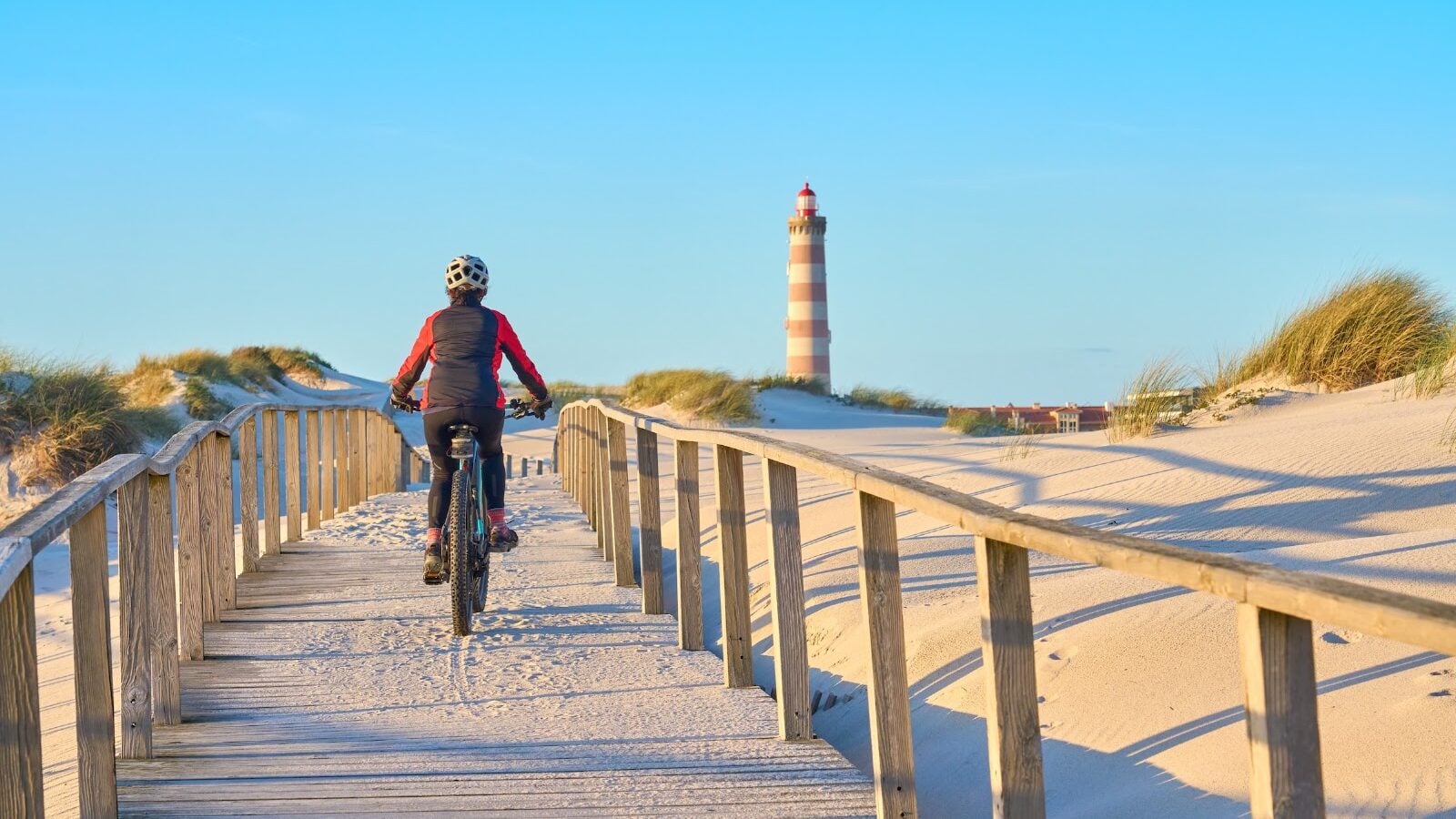
Discover the maritime rhythm of central Portugal, where historic salt pans, colorful fishermen cottages, and elegant Art Nouveau facades meet the wild Atlantic shore.
Where the Lagoon Meets the Ocean
Between the granite weight of Porto and the academic hills of Coimbra lies a landscape shaped entirely by water. The Ria de Aveiro is a vast coastal lagoon, a labyrinth of silvery channels, shallow marshes, and sandspits that stretch along the central Atlantic coast. For centuries, this aquatic world dictated the lives of the people who called it home. Sea salt, seaweed gathered for inland fertilizer, and an abundance of eel and sea bass formed the bedrock of a quiet, resilient maritime community.
Today, Aveiro carries an appeal that feels distinctly separate from the rest of the country. Often compared to Venice because of its central urban canals, the city has a personality that is entirely Portuguese. The light here bounces off wide water surfaces and pale stone pavements, giving the town an airy, open quality. Just a few miles to the west, where the lagoon narrows against the raw Atlantic, sits Costa Nova, a former fishing outpost famous for its cheerful, striped wooden houses. Together, they offer one of the most delightful coastal pairings in Portugal, ideal for travelers who appreciate authentic regional traditions, brilliant architecture, and unhurried coastal air.
Art Nouveau and the Painted Moliceiro Boats
Walking along the Canal Central in Aveiro, your eyes immediately catch the gracefully curving silhouettes of the moliceiro boats. Historically, these slender, high-prowed wooden vessels were workhorses. Crews used long wooden rakes to harvest moliço, the submerged lagoon algae that local farmers dried and used to enrich the sandy coastal soils. While the collection of seaweed has faded into history, the craft of building and hand-painting these boats remains alive. Each prow features brightly colored, often humorous or devotional folk art scenes, chronicling local life, maritime folklore, and tongue-in-cheek social commentary.
Framing the canals is one of the most striking collections of Art Nouveau architecture in the Iberian Peninsula. In the early twentieth century, local emigrants who had amassed fortunes in Brazil returned home, eager to build grand residences that showcased their success. They embraced the sinuous lines, forged iron balconies, and floral ceramic tile panels popular in Paris and Brussels. Strolling through the Rossio quarter reveals masterworks like the Casa do Major Pessoa, now the city Art Nouveau Museum, and the former cooperage building along the Rua de Joao Mendonca, where stone and glazed tiles depict soft water lilies and sculpted maidens.
The Storied Palheiros of Costa Nova
Cross the bridge over the lagoon toward the ocean barrier, and within ten minutes the scenery shifts dramatically. Costa Nova do Prado sits between the calm waters of the Ria and the rolling breakers of the Atlantic. The town is instantly recognizable by its palheiros, the timber cottages painted in vibrant vertical and horizontal stripes of crimson, navy blue, forest green, and sunny yellow.
These structures were not conceived as whimsical holiday backdrops. In the nineteenth century, local fishermen built simple wooden shacks out of local pine to store their nets, oars, salt barrels, and fishing tackle. Over time, as families began spending summer months near the fishing grounds, they converted the upper levels into living quarters. To help fishermen spot their homes through the thick morning sea fogs that often roll across this coast, owners began painting the bare wood with bright, contrasting bands of marine paint. Today, the pedestrian promenade facing the lagoon offers an unhurried walk past these lovingly preserved homes, where flower boxes overflow with geraniums and the scent of briny air hangs fresh in the breeze.
Browse our travel inspiration for ideas, or tell us what kind of day you have in mind.
Atlantic Flavors: Eels, Sea Salt, and Soft Egg Sweets
A visit to Aveiro is incomplete without sitting down to explore its unique culinary repertoire. Near the fish market in Praca do Peixe, taverns still prepare caldeirada de enguias, a traditional eel stew simmered with potatoes, onions, and spiked with saffron and vinegar. For those who prefer ocean catches, nearby coastal spots grill sea bass and sardines over glowing charcoal embers with little more than olive oil and coarse sea salt harvested right from the local pans.
Then comes the sweet obsession of the city: Ovos Moles de Aveiro. Created centuries ago by nuns at the Convent of Jesus, this delicate sweet consists of creamy, sweetened egg yolks encased in paper-thin communion-wafer shells molded into shapes of shells, whelks, barrels, and fish. Step into a traditional pastelaria such as Confeitaria Peixinho, which has been making them since 1856, and order an espresso with two fresh ovos moles. The crisp exterior gives way to a velvety, rich yolk filling that represents Portuguese conventual confectionery at its purest.
Planning Your Journey Across Central Portugal
Aveiro is exceptionally well situated for exploring central and northern Portugal. Located roughly fifty miles south of Porto and forty miles north of Coimbra, it serves as a natural stop when journeying between the north and Lisbon. Driving from Porto takes about fifty minutes along the A1 highway, while the journey north from Lisbon takes just under two and a half hours across the gentle rolling landscapes of the Beira Litoral.
Because parking near the historic center of Aveiro can be tight and the route between the salt pans, the Vista Alegre porcelain village in Ilhavo, and the seaside promenade of Costa Nova requires multiple short drives, having dedicated transport makes all the difference. Traveling in a comfortable Mercedes-Benz vehicle with Portugal Magik turns this region into an effortless day trip or a relaxed transfer day between Lisbon and Porto. A local driver and guide can shape the day around your personal interests, timing your visit to the Costa Nova fish market before the midday rush and securing quiet moments along the canal paths away from larger tour groups.
Practical Tips for Lingering by the Ria
To experience the area at its best, plan for an early morning arrival. The light over the salt pans at Troncalhada is extraordinary between eight and ten in the morning, when the white pyramids of fleur de sel gleam against the shallow water mirrors and herons wade through the brine. If you wish to experience a moliceiro boat ride, aim for late afternoon when the sun lowers toward the ocean, casting warm amber tones across the Art Nouveau facades.
Consider extending your exploration slightly south to Ilhavo to visit the Maritime Museum, which houses a fascinating tribute to the Portuguese cod fishermen who spent lonely months in the icy waters of Newfoundland and Greenland. Whether you are spending a leisurely morning admiring striped timber cottages or an entire day discovering the maritime heritage of the central coast, traveling with Portugal Magik ensures a seamless, deeply informed journey through one of the most characterful corners of the country.
Plan your own day
Share your dates, group size and interests, and we will suggest a tailored plan with a local driver/guide.