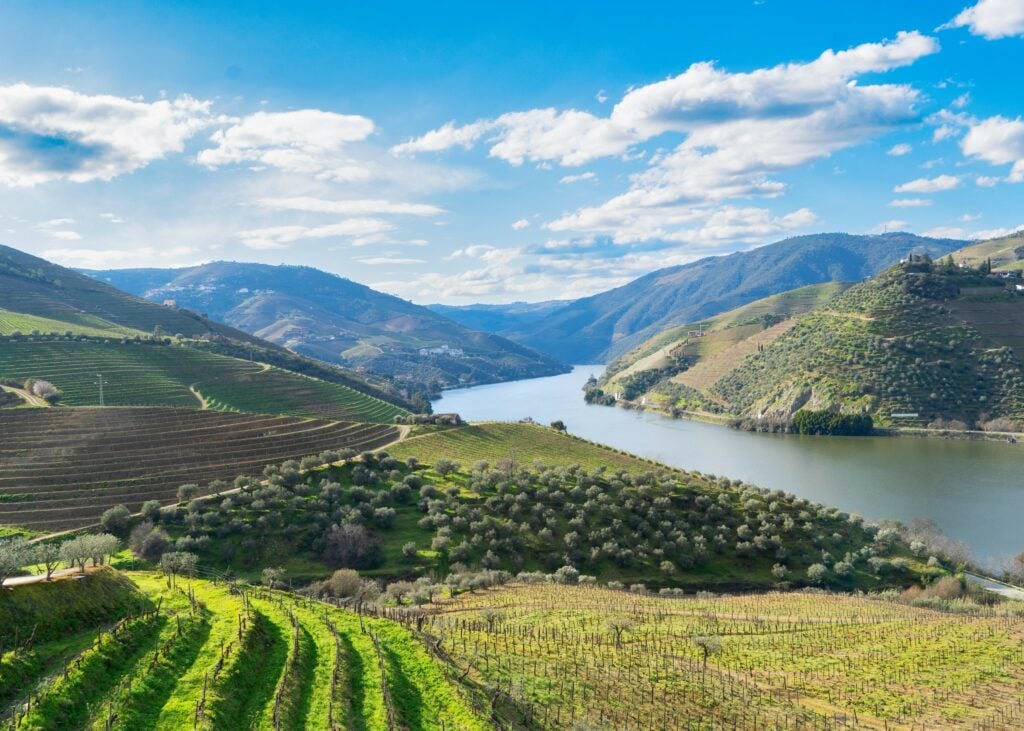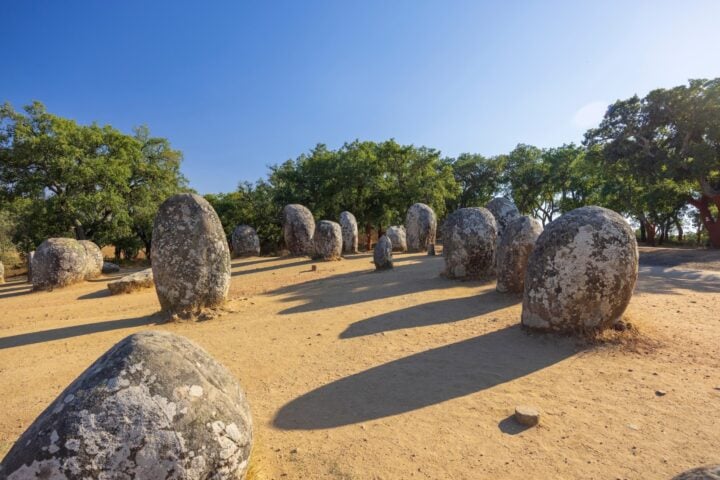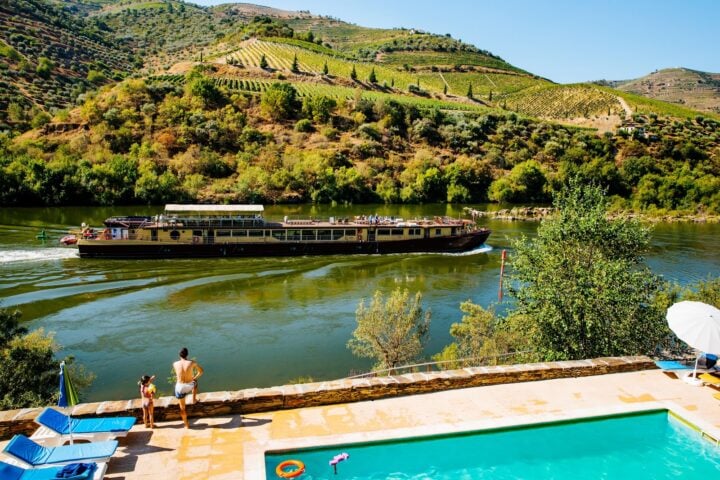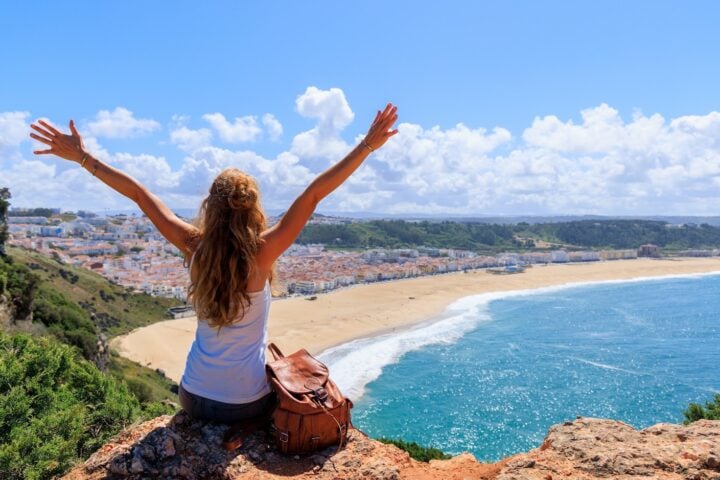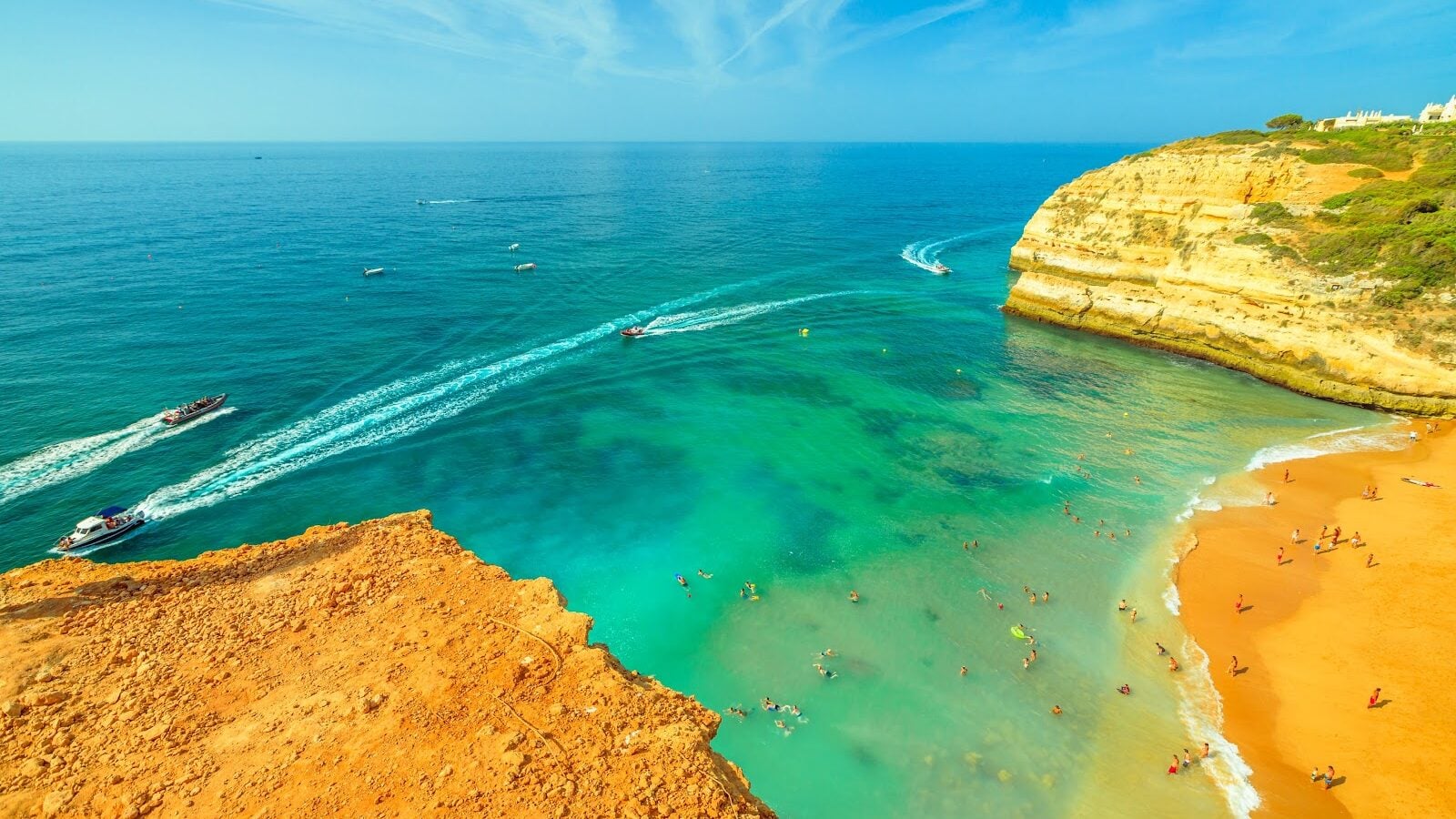
Step away from the crowded sand to discover medieval red-stone castles, cool mountain springs, and quiet border hamlets across southern Portugal.
The Other South: Looking Inward from the Ocean
Most travelers picture the Algarve through a single lens of turquoise waves and golden limestone cliffs. Yet just twenty minutes north of the shoreline, the coastal hum fades into an older, deeply rooted Portugal. Here, red earthen hills carry ancient almond groves, hillside hamlets gather around whitewashed chimneys, and cork oak forests catch the breeze off the Atlantic. This is the Barrocal and the Serra, regions shaped by Moorish agriculture, Roman trading routes, and centuries of quiet mountain living.
To spend five days exploring the interior of the Algarve is to understand how the south actually sustains itself. It means exchanging sun umbrellas for wild herb trails, crowded boardwalks for sleepy village squares, and modern beach resorts for traditional taverns where goat stews and medronho brandies are poured with pride. With a thoughtful pace, you can trace an arc from the border river of the Guadiana to the western mountain peaks above Monchique, discovering a timeless region that rewards patient travelers.
Day One: Red Stone and Moorish Memories in Silves
Begin your journey in Silves, once the Moorish capital of the Algarve known as Xelb. Located about forty-five minutes west of Faro Airport, Silves immediately commands attention with its imposing red sandstone castle, the Castelo de Silves. As you walk up the cobblestone streets past orange trees and quiet cafes, you step into a city that once rivaled Lisbon in cultural prestige. The fortress cisterns and defensive parapets offer sweeping views over the Arade river valley, where trade boats used to bring goods from North Africa directly into the inland hills.
Down in the lower town, stop at a traditional tasca near the Gothic cathedral for lunch. Order ensopado de javali, a rich wild boar stew, or fresh grilled river fish seasoned simply with local garlic and olive oil. After lunch, take an unhurried walk through the municipal archeological museum, built right around an eleventh-century water well. The afternoon light turns the sandstone walls a deep ochre, making late afternoon the finest hour to sit in the central praca with a cup of bica and a slice of almond tart.
Day Two: Chestnut Woods and Cloud Forests in the Serra de Monchique
Drive inland toward the dramatic granite hills of the Serra de Monchique, which rise nearly a thousand meters above the ocean. The road climbs steadily through terraces of eucalyptus, cork oak, and ancient chestnut trees, dropping the temperature by several degrees. First, pause at Caldas de Monchique, a shaded valley settlement famed since Roman times for its natural thermal springs. The stone fountains flow with pure alkaline water, and nineteenth-century villas sit quietly beneath giant magnolia trees.
Continuing up past the village of Monchique, head to Foia, the highest point in southern Portugal. On a clear morning, you can look out across the rolling green interior all the way south to Portimao and west toward the Atlantic cape at Sagres. For lunch, seek out a rustic roadside tavern along the mountain road to taste presunto de Monchique, the regional cured ham, alongside slow-cooked pork belly seasoned with mountain herbs. A private journey across these steep, winding roads is made remarkably smooth with Portugal Magik, whose knowledgeable local team navigates the hairpin turns in comfortable Mercedes-Benz vehicles while sharing the deep forestry history of the Algarve highlands.
Browse our travel inspiration for ideas, or tell us what kind of day you have in mind.
Day Three: Cork Forests and Tile Traditions in Sao Bras de Alportel
Head east along the foothills to Sao Bras de Alportel, an authentic market town that flourished during the nineteenth-century cork boom. The drive from Monchique takes about an hour, threading through rolling countryside planted with carob and fig trees. Unlike coastal resort towns, Sao Bras retains its distinct domestic architecture, where modest homes feature decorative blue tiles, wrought iron balconies, and intricate openwork plaster chimneys, each designed as a personal artistic statement by the builder.
Visit the Costume Museum, housed in an elegant former cork merchant residence, to see regional textiles and learn how the surrounding montado oak forests have sustained generations of cork harvesters. Afterward, visit an artisan workshop producing dried fig cakes wrapped in almond paste, a treat known as morgado. In the afternoon, take the scenic country lane down toward Estoi to wander the ruins of Milreu, an expansive first-century Roman agricultural villa featuring preserved ocean mosaics, oil presses, and temple foundations that remind you of the land’s classical past.
Day Four: River Rhythms Along the Guadiana at Alcoutim
On the fourth day, venture out to the remote eastern border where the Algarve meets the Spanish frontier. The drive to Alcoutim takes roughly seventy minutes from central Algarve, winding through open country of cistus bushes and slate stone walls. Alcoutim sits peacefully on the banks of the Guadiana River, facing its Spanish twin, Sanlucar de Guadiana, directly across the water. Here, wooden fishing skiffs bob gently near the river wall and white storks build vast nests upon church towers.
Climb up to the fourteenth-century castle of Alcoutim, built to defend Portuguese territory during centuries of medieval border conflicts. The views of the peaceful river below belie the turbulent history of smugglers, soldiers, and traders who passed through this remote outpost. For lunch at the riverbank, taste fresh lamprey or fried river fish served with tomato-infused migas bread. The rhythm here is completely unhurried, reflecting the deep Alentejo character that bleeds softly into the northeastern Algarve hills.
Day Five: Crafts and Cobbles in the Hills of Loule and Alte
Conclude your interior route by exploring the creative pulse of Loule and the whitewashed peace of Alte. Start your morning in Loule, an active market town whose neo-Moorish brick market hall anchors daily life. Wander into the narrow craft quarters behind the market, where coppersmiths hammer kitchen vessels, leatherworkers craft sturdy belts, and weavers work with dried palm leaves using techniques passed down over generations.
From Loule, a short thirty-minute drive brings you to Alte, often considered one of the most untouched villages in southern Portugal. Stroll between crisp white houses accented with bright borders of ochre and ultramarine blue down to the Fonte Pequena, a natural spring where villagers historically gathered to wash linens and share local news. Traveling with Portugal Magik allows you to experience these quiet mountain pockets seamlessly, as your local driver can shape the day around your personal interests, pausing for an impromptu honey tasting or detouring to a secluded ceramic kiln.
Before your trip draws to a close, stop at an unpretentious village restaurant for a warm clay pot of feijoada de buzinas, white bean stew cooked with sea snails, linking the harvest of the southern waters with the earthy sustenance of the hills. You depart having witnessed an Algarve of substance, quiet stone, and generous local hospitality that beachgoers rarely imagine.
Plan your own day
Share your dates, group size and interests, and we will suggest a tailored plan with a local driver/guide.